Planning your first safari in Kenya can feel overwhelming. There are different parks, different seasons, different types of safari experiences, and plenty of choices when it comes to accommodation and transport. The good news is that you do not need to know everything before you start.
Kenya offers a remarkable range of wildlife experiences, from the open plains of the Maasai Mara to the elephants of Amboseli and the diverse landscapes of Tsavo. The right safari depends largely on what you want to see, how long you have, and when you plan to travel.
Key Facts
Best Overall Period: June to October is generally a popular period for wildlife viewing because many areas are relatively dry and animals are often easier to spot.
Great Migration: The annual wildebeest migration moves through the Maasai Mara at varying times, with activity commonly associated with the July to October period.
Short Rains: November and December can bring greener landscapes, with rainfall patterns varying from year to year.
Long Rains: March to May is traditionally Kenya's main wet season, although conditions vary by region.
Popular Safari Areas: Maasai Mara, Amboseli, Tsavo East, Tsavo West and Samburu offer different landscapes and wildlife experiences.
Safari Duration: A first safari can work as a short 3-day trip, while 5–7 days gives you more opportunity to combine destinations.
Travel Tip: Choose your destinations and travel dates based on the experience you want rather than simply trying to find a single "perfect" safari month.
Why Choose Kenya for Your First Safari?
Kenya is one of the destinations where a first-time safari can be relatively straightforward to plan because there are several established wildlife areas with different characteristics.
The Maasai Mara is famous for its open grasslands and large concentrations of wildlife. Amboseli is particularly well known for its elephant populations and views toward Mount Kilimanjaro. Tsavo offers a much larger and more varied landscape, while Samburu provides a different northern Kenya experience.
This variety means that your safari does not have to follow a single formula.
Choosing Where to Go on Safari
Maasai Mara
The Maasai Mara is one of Kenya's best-known safari destinations and is a natural choice for travellers interested in big cats, large herbivores and the open savannah landscape.
The reserve and surrounding conservancies can offer excellent opportunities for wildlife viewing throughout the year, although the experience changes with the seasons.
If the Great Migration is an important part of your plans, your timing becomes particularly significant. However, migration movements are influenced by rainfall and grazing conditions, so exact dates should never be treated as guaranteed.
Looking for a Maasai Mara Safari?
If you are travelling from Nairobi and want to turn your Kenya safari plans into a specific itinerary, you can explore a 3-day, 2-night Maasai Mara group safari option.
This is particularly useful if you have limited time and want to focus your trip around one of Kenya's most famous wildlife destinations.
Amboseli National Park
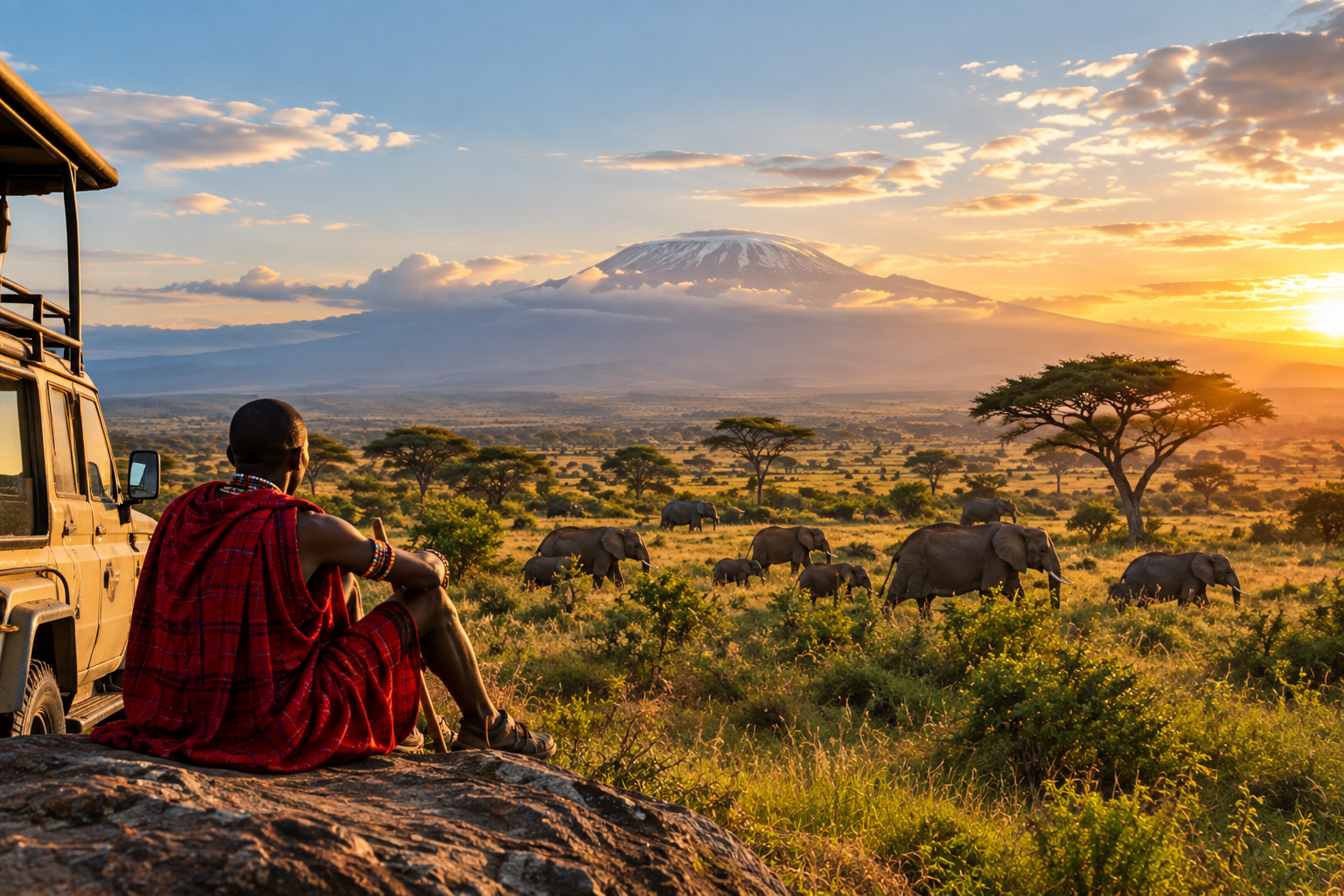
Amboseli is particularly associated with elephants and its spectacular views toward Mount Kilimanjaro. The landscape can be very different from the Mara, making it an interesting addition to a longer Kenya itinerary.
For photographers and travellers who want a combination of wildlife and dramatic scenery, Amboseli offers a distinct safari experience.
Tsavo East and Tsavo West
Tsavo is one of Kenya's major wildlife regions and covers a huge area. Tsavo East and Tsavo West have different landscapes and attractions, so travellers should consider their route and available time before deciding how to combine them.
Tsavo can work particularly well for travellers who want to experience a less concentrated safari landscape while still having opportunities to see a wide range of wildlife.
Samburu
Samburu in northern Kenya offers a different environment from the southern safari circuit. The landscape is more arid, and the region is known for wildlife species and experiences associated with northern Kenya.
It is worth considering if you have more time and want to explore beyond the most commonly visited safari destinations.
When Should You Visit Kenya?
There is no single month that is perfect for every safari traveller.
Your preferred travel period should depend on what you want to see, how much you are willing to spend, how you feel about crowds, and whether particular experiences such as the Great Migration are important to you.
For many travellers, June to October is an attractive period because conditions are generally drier in many safari areas. However, other months can provide greener scenery and a different style of safari experience.
Read our guide to the best time to visit Kenya if your main question is when to plan your trip.
Understanding the Great Migration
The Great Migration is one of the most famous wildlife spectacles associated with East Africa. Large numbers of wildebeest, accompanied by other grazing animals, move through the ecosystem in response to changing rainfall and availability of fresh grazing.
The Maasai Mara becomes an important part of this movement when the herds enter Kenya. The timing varies from year to year, so travellers should be cautious about treating a particular date as guaranteed.
River crossings are also unpredictable. They can happen during periods when the herds are in the Mara, but no safari operator can guarantee that a crossing will take place during your particular visit.
How Long Should a Kenya Safari Be?
A short safari can still provide a meaningful wildlife experience, especially if you concentrate on one destination.
A three-day safari is practical for travellers with limited time. It can allow you to travel from Nairobi to a major wildlife destination, spend time on game drives and return to Nairobi.
If you have five to seven days, you have more flexibility. You can combine destinations such as the Maasai Mara and Amboseli, or spend longer exploring one region.
Longer itineraries become particularly useful when you want to combine safari with other parts of Kenya, such as the coast.
What Should You Pack for a Kenyan Safari?
- Lightweight, comfortable clothing suitable for warm daytime conditions.
- A warmer layer for early morning and evening game drives.
- Comfortable closed shoes.
- Sunscreen and sunglasses.
- A hat or other sun protection.
- Binoculars if you enjoy watching birds and distant wildlife.
- A camera or smartphone with enough storage.
- Personal medication and essential travel documents.
Your exact packing list should depend on the season, destination and type of accommodation you choose.
Health and Travel Preparation
Health requirements and recommendations can depend on your country of departure, destination, travel history and current health guidance.
Before travelling, check current official travel and health advice and speak with a qualified medical professional where appropriate. Travellers should also consider travel insurance and make sure they understand the conditions of their accommodation and safari arrangements.
Respecting Kenya's People and Communities
A safari is not only about wildlife. Kenya is home to many communities with their own histories, cultures and ways of life.
When visiting communities or participating in cultural experiences, choose responsible operators and treat people with the same respect you would expect as a visitor in your own community.
Ask before photographing people, follow local guidance and remember that cultural experiences involve real communities rather than simply being attractions created for tourists.
Safari and Beach
One of the advantages of travelling through Kenya is that a safari does not have to be the entire holiday.
After spending time in the national parks and reserves, travellers can continue toward the Kenyan coast for beaches, marine activities, coastal food and a slower pace.
This combination can work particularly well for travellers visiting Kenya for the first time because it allows them to experience two very different sides of the country.
How Much Planning Does a Kenya Safari Require?
The amount of planning depends on the type of trip you want.
A short, single-destination safari can be relatively simple. A longer itinerary involving several parks, domestic flights, accommodation changes and beach extensions requires more coordination.
At a minimum, you should think about your travel dates, destinations, transport, accommodation, safari activities, budget and travel insurance before making bookings.
If you are travelling during a particularly popular period, planning further in advance can also give you more accommodation and itinerary choices.
Planning Your First Kenya Safari
The best way to start is to work backwards from the experience you want.
Do you want to concentrate on wildlife? Are you interested in the Great Migration? Do you want elephants and mountain scenery? Would you prefer a combination of safari and beach? How many days do you actually have?
Once you answer those questions, choosing destinations and dates becomes much easier.
You do not need to visit every famous park on your first trip. A well-planned itinerary with enough time to enjoy each destination can be more rewarding than trying to cover too much ground.
Start Planning Your Kenya Adventure
Kenya offers enough variety for both first-time safari travellers and people returning for another visit. The key is matching your itinerary to your available time, interests and travel period.
If the Maasai Mara is the experience you want to build your trip around, you can start by exploring available safari options and then plan the rest of your itinerary around the number of days you have available.
Explore a 3-Day Maasai Mara Safari
Short on time? This option is designed around a 3-day, 2-night Maasai Mara safari from Nairobi and can be a useful starting point when comparing safari possibilities.
Planning a Kenya safari is ultimately about choosing the right combination of destination, timing and experience. Start with what matters most to you, then build the journey around it.
Frequently Asked Questions
What is the best month to visit Kenya?
There is no universally best month. June to October is generally popular for wildlife viewing in many areas, while other periods can offer greener landscapes and different travel conditions.
When is the Great Migration in Kenya?
The migration reaches the Maasai Mara at varying times, with activity commonly associated with the July to October period. Actual movements depend on rainfall and grazing conditions.
Can I see the Big Five in Kenya?
Kenya offers opportunities to see lions, leopards, elephants, buffalo and rhinoceros, although wildlife sightings are never guaranteed.
How many days do I need for a Kenya safari?
A three-day safari can work if you want to concentrate on one destination. Five to seven days gives you more flexibility to explore multiple areas.
Is Maasai Mara suitable for a first safari?
Yes. The Maasai Mara is one of Kenya's most established safari destinations and offers a wide range of wildlife-viewing opportunities.
Can I combine a Kenya safari with a beach holiday?
Yes. Many travellers combine a safari with time on the Kenyan coast, creating an itinerary that includes both wildlife and coastal experiences.


